How Much Should Paper Shredding Services Cost Your Hospital?
Hospitals have made significant strides in recent years toward going fully digital, but there’s still a heavy reliance on paper.
From a patient‑intake standpoint, hospitals may use paper forms for certain complex consents or specialty‑specific questionnaires, while other parts of the process are digitized. Meanwhile, many facilities continue to rely on paper invoices, sometimes as part of a hybrid strategy to build trust with and engage patients.
The fact is, U.S. healthcare facilities generate nearly two billion pounds of paper and cardboard waste every year.
Because of this volume (and because paper containing patient information must be disposed of properly per HIPAA and other privacy laws) there’s a clear value for hospitals to invest in paper‑shredding services to handle sensitive document disposal. What’s less clear, though, is exactly how much those services should cost an organization.
What Drives the Cost of Hospital Paper Shredding Services?
Volume is the biggest factor affecting how much your hospital will pay for shredding services. Naturally, the more paper you generate, the more it costs to securely dispose of it.
The cost to shred hospital papers typically scales based on weight and is typically billed at a per-pound or per-box rate. Larger facilities with higher throughput will see higher recurring costs, though some of this cost can be offset thanks to bulk pricing or volume-based discounts.
Other considerations, like how your shredding is structured, how often it’s picked up, and what compliance standards you require, can also shift a final figure up or down.
Service Model: On-Site, Off-Site or Drop-Off Shredding
Whether you’re using on-site shredding, off-site pickup, drop-off shredding services or one-time purges, your chosen service model impacts cost structure. On-site or mobile shredding offers the highest security but tends to be more expensive. Off-site pickup is more budget-friendly but adds steps to the chain of custody. Drop-off may be the cheapest option but requires more internal coordination.
Pickup Frequency: Weekly, Biweekly, Monthly
How often you schedule service—weekly, biweekly, monthly or as-needed— also affects pricing. Routine professional shredding services often come with lower per-pickup costs, while sporadic or one-time scheduled shredding services usually come with higher rates due to the added coordination required.
Compliance Requirements for Document Disposal
HIPAA compliance, chain-of-custody documentation, locked bins, certificates of destruction and certifications like NAID AAA are essential for hospitals. They add to vendor overhead though, especially when layered atop a high-volume document shredding service.
A Cost Analysis of Professional Document Shredding Services
To give you an idea of how these costs pan out, we’ll use some industry research and averages as points of reference.
A 1,500-bed hospital can generate up to 96 million pages of paper each year, which translates to around 35,000 boxes annually. With each box weighing approximately 25 pounds, that adds up to an estimated 875,000 pounds of paper that need to be securely shredded each year.
If we apply a weekly pickup model, the cost could look something like this:
- 875,000 pounds per year / 52 weeks = ~16,800 pounds per week
- At an average shredding rate of $1/pound, that’s about $16,800 per week (again, this may vary depending on your service and volume, but this is a good benchmark)
- Annually, this totals approximately $873,600
Actual document shredding costs will, of course, vary by region, vendor, and contract terms, and admittedly, the total cost here reflects a large hospital, whereas the costs for shredding documents may be much lower for a smaller hospital.
What these figures highlight is the scale of spending hospitals could face for secure document destruction alone. Understanding where those dollars go and how to lower them has an understandable impact on operational planning.
The Case for Consolidating Document Shredding With Other Waste Streams
Managing paper shredding separately from your other regulated waste services may seem like the norm, but it’s also costing your hospital more in time, money and administrative effort.
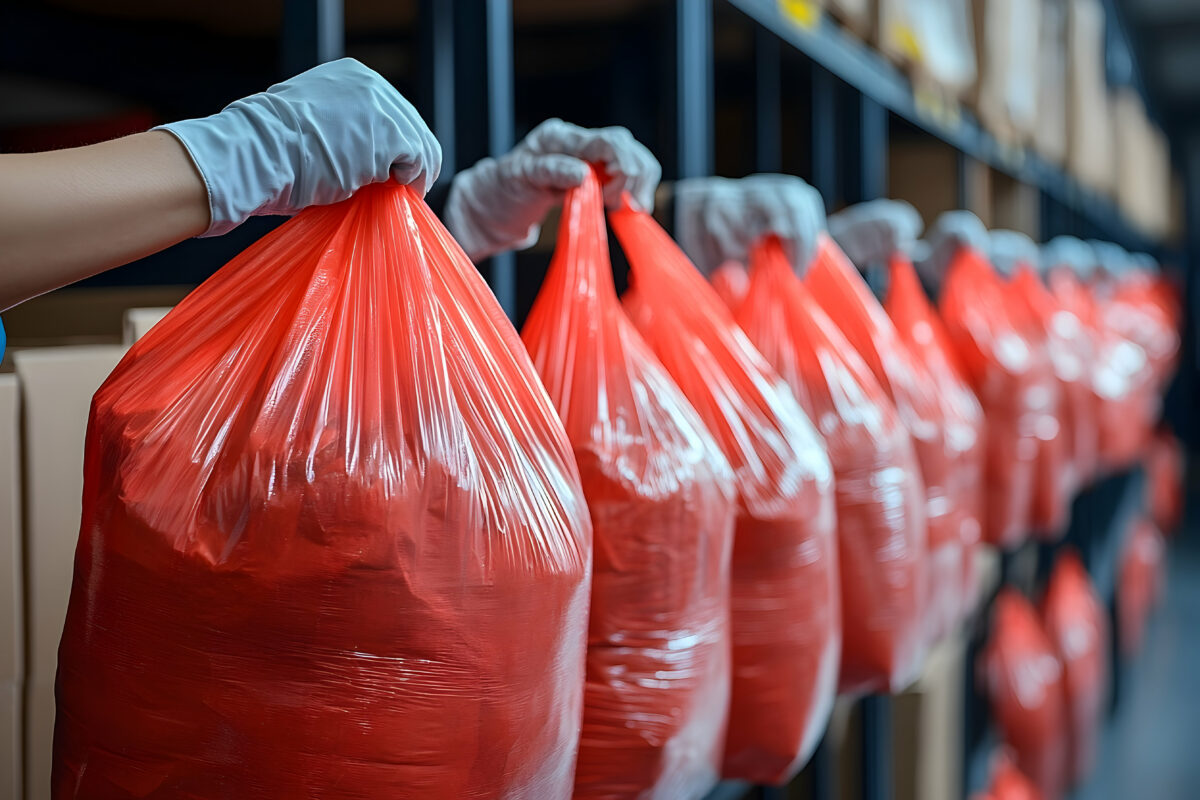
When you work with multiple vendors for document destruction, red bag waste, sharps, trace chemo, and pharmaceutical disposal, you’re managing multiple pickup schedules, contracts, points of contact and compliance processes. That fragmentation increases both the direct cost of service and the indirect cost of coordination.
By consolidating paper shredding with your broader waste disposal strategy, hospitals can reduce complexity and gain measurable operational advantages:
- Lower transportation costs – Fewer vendors mean fewer trips and less fuel usage
- Simplified vendor management – One contract, one point of contact, one schedule
- Improved compliance oversight – Unified protocols and documentation across waste types
- Greater pricing efficiency – Opportunities to negotiate bundled service rates
- Less operational friction – Reduce time spent troubleshooting missed pickups or overlapping services
How WasteMedX Supports a More Efficient Shredding Strategy
With an integrated system like WasteMedX, hospitals can securely shred and dispose of HIPAA documents while also processing other types of medical waste.
The value of this approach goes beyond vendor consolidation. The WasteMedX system reduces overall waste volume, so there’s less material to haul away on your recurring waste schedule. That’s lower transportation costs, fewer service visits, and more predictable billing.
It’s also a more efficient process. WasteMedX uses an environmentally safe ozone treatment method that requires less power, water and time, all while resulting in lower greenhouse gas emissions compared to traditional waste handling and document destruction.
With WasteMedX offering secure shredding and waste disposal under a single per-pound or per-haul agreement, hospitals have a clear path to simplifying operations, staying compliant, and reducing costs. To learn more about our waste treatment and disposal services, contact us.






 Infectious waste–any waste that’s capable of transmitting communicable disease—can be found in pathological waste, infectious sharps, or biological cultures. By exposing the waste’s surface area to ozone for a sustained period of time, ozone treatment sterilizes materials and prepares them for disposal.